
Running Many Agents Is a Management Problem

CTO & Co-founder
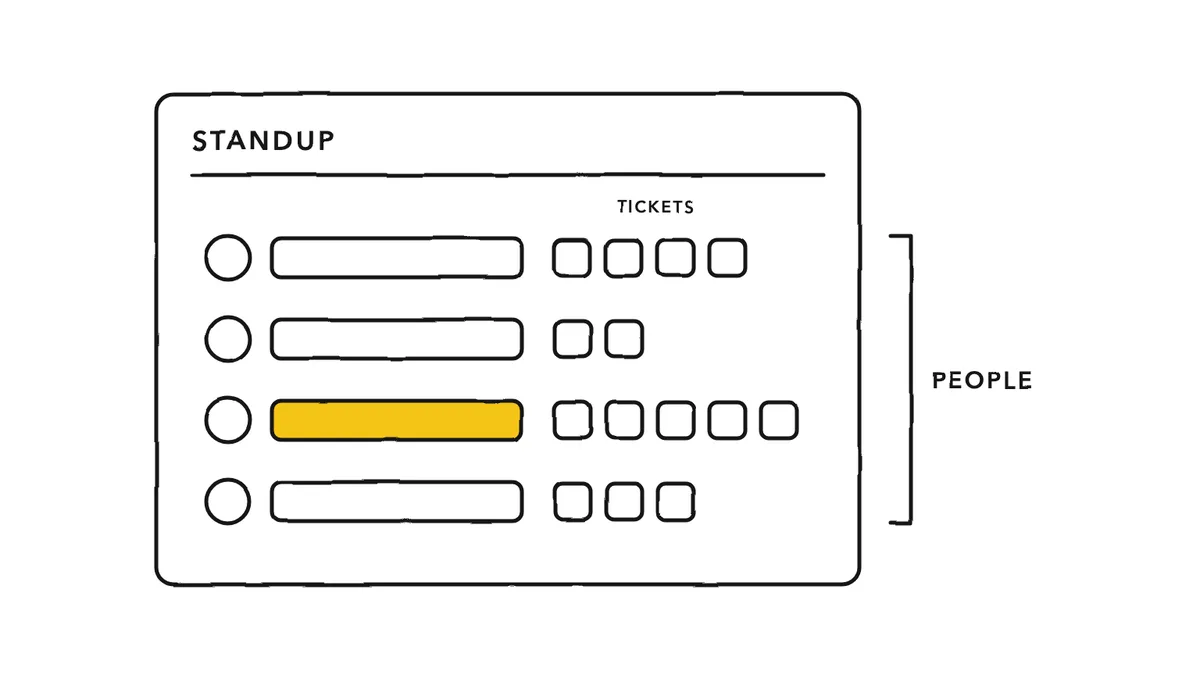
A dashboard doesn't get you far with a fleet of agents. You end up supervising them the way you'd supervise people: every piece of work takes a ticket, and somebody writes the standup.
We found that out late. Once environments came from a pool nobody waited for one, so we started agents as fast as we had work for them.
They don't report in. By the time you notice one has gone the wrong way, it's been going that way for an hour.
Everything takes a ticket
Every piece of work gets one before the first edit, including investigations that produce no code.
That part we had wrong at first. An investigation leaves no pull request, so with no ticket it leaves nothing at all, and somebody repeats the digging a month later.
Nobody reads every agent's output, but a ticket that hasn't moved reads the same from an agent as it does from a person.
Somebody writes the standup
Every night a job reads the day out of GitHub, Linear, our call recordings and the sales pipeline, and writes the standup nobody wants to write.
The rows are people, not agents. Work you directed appears under your name the same as work you typed, which still reads right as more of the work shifts to agents.
What it added up to
All of it landed inside a single month. These are my merged pull requests across it.
- 7822 Jul to 1 Aug
- 871 to 11 Aug
- 14111 to 23 Aug
The last ten days ran at nearly double the first, as each change made the next piece of work cheaper to start.
What we got back
The part I didn't expect was what it freed up. When how to build something stops being the hard part, the time goes to deciding what to build, and that happens with customers.
We work with our design partners close to real time now. Someone describes a problem on a call and the improvement is in front of them in days. Because we build for everyone at once, the fix for them ships to every customer we have.
None of that came from writing code faster. It came from a pool of environments, a ticket for every piece of work, and a standup nobody has to write. Plumbing and paperwork, and between them they let a handful of us build at close to the speed we can think.

Written by
Chris Fong
CTO & Co-founder